Monday, February 8, 2016

When in Rome, Watch T.V. テレビ

So, customs in Japan are very different from America.

     The fortunate thing about this problem is that no one can accidentally confuse me with a native Japanese person, which means that they give me extra grace and have low expectations for my adherence to cultural norms. 

     The unfortunate thing is that I have no clue what to do in different situations, and I don't even know which situations should be different from America. I know that I have already made several faux pas, and every time I do there is an awkward pause (because the poor Japanese person was not expecting that) before they politely move on as if nothing happened.  

      Although there are some great resources online in vlogs and websites about what to do/not do in Japan, they can't possibly cover all of the little things, so I am left to asking my awesome new friends (who both speak English and are willing to help me) or just watching other people to see what they do. Another great way to learn is to watch children's television. It sounds silly, but several of the things that I noticed people doing on the streets are also shown (and even explained, albeit in Japanese) on the children's t.v. because the kids don't know what to do either! So that's great when I can find it (between all of the other odd programming on my t.v.)

     In addition to habits and actions, there are several other things that have struck me as uniquely Japanese (or at least not American). Here is a short list of some of the things.

1.   Everything is smaller: rooms, kitchen tools, dishes, notebooks, gifts, food, furniture... and smaller usually means more adorable. かわいいですね!
2. Nothing wasted: there is no wasted space or wasted goods. Below is a shower/laundry room combo so that every inch of the little spaces will be well used.


3. Trash and Recycling: they are very particular about what goes where. Take for example, a water bottle. The bottle goes in plastic recycling while the cap and label go into burnables. Coffee cans into non-burnable. Here is a public receptacle in a mall to illustrate my point.


4. Katakana: there is a shocking amount of katakana EVERYWHERE. Katakana is the special alphabet that Japanese uses for borrowed foreign words. It is on the billboards of foreign restaurants like Denny's and McDonald's, but also on almost all packaging. Apparently foreign things and English are very cool. 


5. Miss-spelling: in their attempt to inundate signage and clothing (and everything else) with foreign words, they don't always get it right...


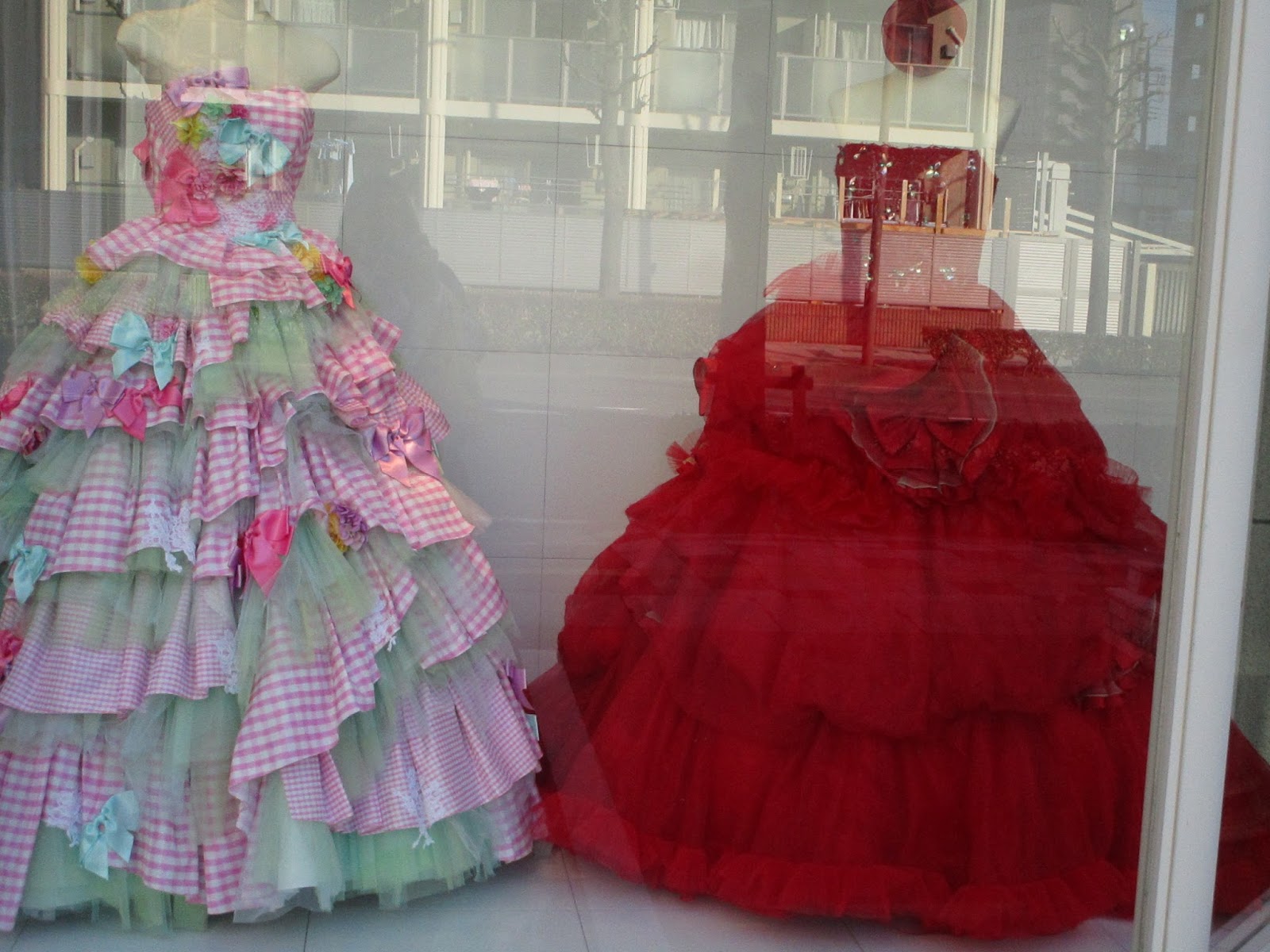
6. Fashion: stateside, you can always tell if someone has a Japanese heritage or is actually Japanese by there fashion. And the two distinct things that I have noticed about Japanese fashion is that it is always impeccable - the people here look neat and ironed no matter where they are. I also noticed that they mix a bolder color palate. Below are example wedding dresses on display in a wedding shop window. 

7. The lack of distinction between green and blue. Below is a sign giving directions to some shop that was three stoplights ahead. Notice that the "green light" is blue. The green lights on the street are all legitimately green, but signs and billboards that illustrate green lights indiscriminately switch between a green and blue hue. In Japan, they use the same word to describe both colors. It is not that they are color blind, it is just that they don't make the distinction as a culture. Interesting cultural-linguistic phenomenon. Linguistics-nerd problem.


Sunday, February 7, 2016

Little House in the City

             
a sign in the elevator to my apartment
and it's no joke, the doors on the elevators 
stay open for only 2 seconds or so and then
are not afraid to close on you.

        There were several non-American things that I expected from moving into my apartment in Japan. For example, I knew that dishwashers, dryers, and beds wouldn't come standard. I expected a clothesline on my balcony. I should do a separate blog on balconies and how much I love them! I expected everything to be smaller, and I expected to take my shoes off at the entrance which has been an unexpectedly easy habit to get into. So in some ways I was mentally prepared for the changes. Even so, here are some of the things which are most notable or shocking for me. Even though I may have been told about them in advanced, 'tis still surprising. 

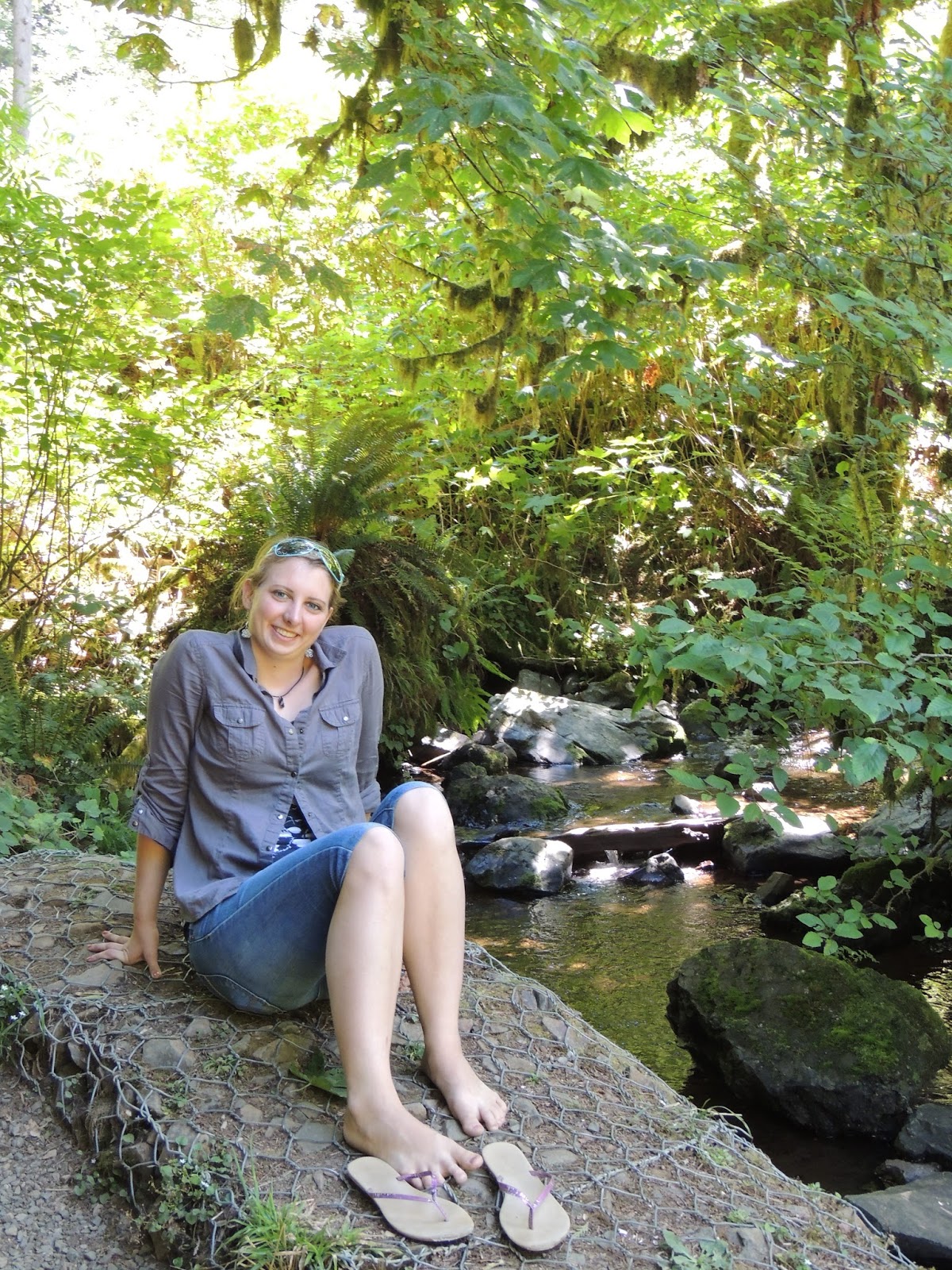
       Everything is so small! I know I anticipated this in my previous post, but Wow. Seriously. My whole apartment is barely over 200 square feet including kitchen, bathroom, laundry room, living room, bedroom. Im in shock. I like the smaller overall size of the apartment because it means that there is less to clean. It also means that there is less space for me to store things so I can't be a pack rat and collect things... Which is a shame because Japan sells so many cute things! Below you can see my living room with a table and "couch" and TV. Then you see me in the room and (to me) it looks like I photo-shopped a too-big me into the room.
         Also, everything is closer to the ground which I actually kind of like. I always have preferred sitting on the floor and now I can use the floor without seeming weird. 
      I don't have a kotatsu yet. That's the heated table with blankets that the Japanese use in lieu of central heating. My lack is due in part to the fact that I am not sure where to by one and also because I don't know how to get it home once I buy it. Instead this table is my usual work space for my computer. I have a desk in the other room for my paperwork stuff, but I have to sit on a chair for the other desk (eww) so it turned into a storage space instead of a workplace. The TV is more of a decoration than a tool right now because I am not a big fan of the programs that I have on the 6 channels: Japan ninja-warrior competitions, soap operas, food notwork, travel channel, kids show, and news.
       In the top left of the picture you can see the space heaters. There is one for each of my two 15x8 foot rooms. Since they are not part of a central heating system and Japanese houses generally have poor insulation the heaters have to be turned on and off when I enter and leave my apartment. Remembering to do that is a new experience for me. So the first 20 minutes after I come home, it's rather chilly (4C or 39F). Something else I have to turn on and off is the water heater. All of this preheating is making me a pretty good planner. The consequences for not planning is taking an unheated shower, which is a mistake that I will not make again...

     Speaking of showers, bath rooms in Japan are a "shower space" basically a tiled space with a drain on the floor where you shower before getting into the tub. Suds and dirt do not belong in the bathtub. Both the shower space and the tub are small, again. the tub is much taller than western tubs (2 feet high) but only half as long. As you can see, there is not a toilet in the same room as the shower. The toilet and shower are completely separate rooms, although both open into the same hallway.
       The toilet, as seen below, has its own, special pair of slippers. It also has a sink built into the back. As the toilet refills, the water first flows through the faucet on the back of the toilet for you to rinse your hands. I have never seen soap near the toilet sinks... so I question their sanitation and wash my hands again outside the bathroom. Plus, the water refilling the toilet is SO COLD.


   Japan also has magical appliances. The stove will not turn on unless there is a pot on it. The microwave has a setting where it "senses" what's in it and heats it accordingly. The washing machine can tell how much clothing is in it and only uses enough water to wash that amount. Talk about energy saving.


         And finally, because everyone who has Skyped me and seen them have been very excited by them... I have sliding doors between my rooms. 


     Now to unpack my bags and settle in and figure out this Japan thing...


Monday, February 1, 2016

Bullet Train 新幹線


Traveling from Okayama to Mito (my new home) was a 6 hour trip by bullet train (shin-kan-sen) which reaches speeds of 200 miles per hour. The train is so fast that you have to look at objects in the distance in order to not get a headache.  The total distance was approximately 500 miles. 


In the spirit of flying past objects, this post will be snapshots and short captions of my trip. 


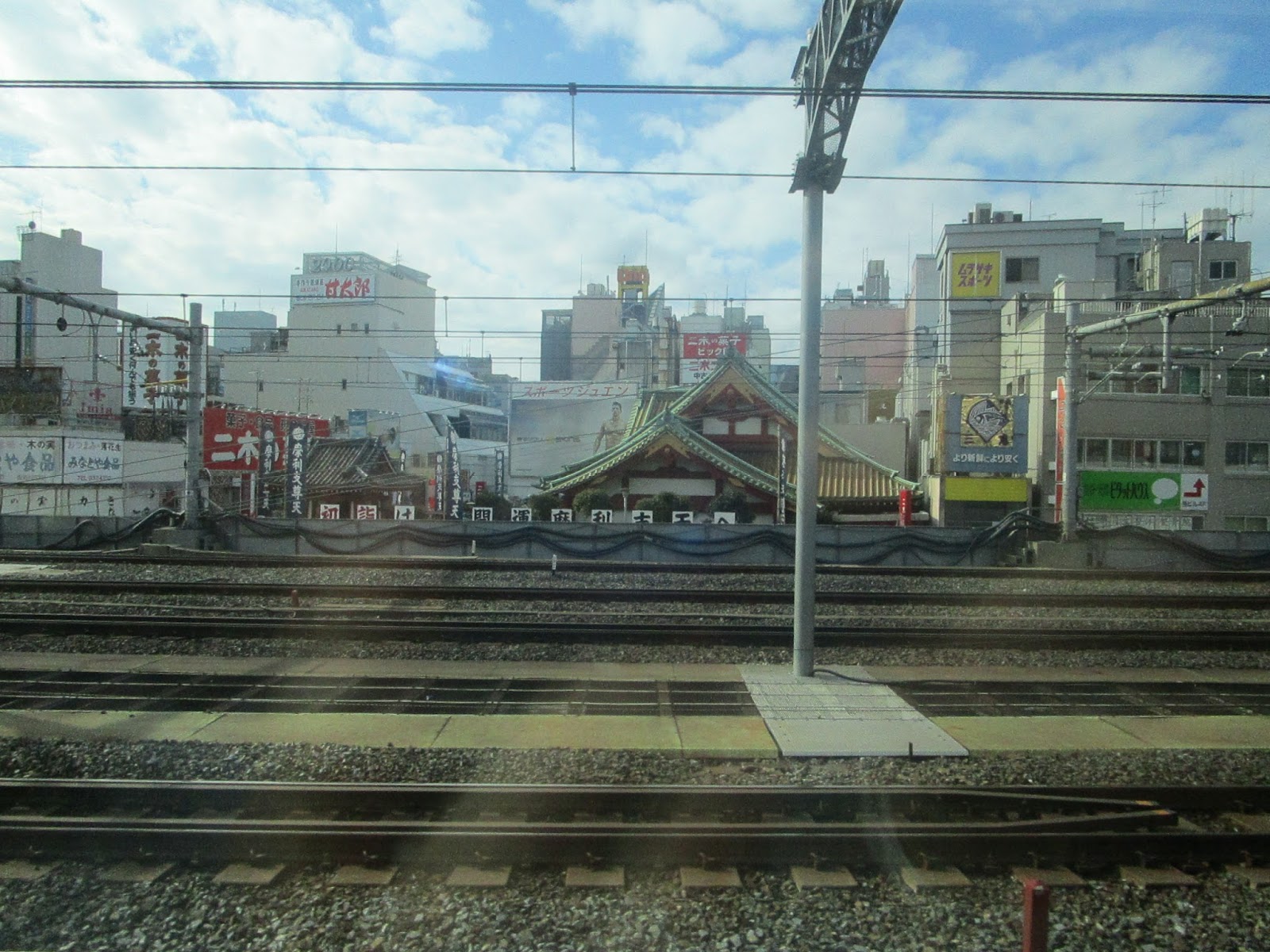
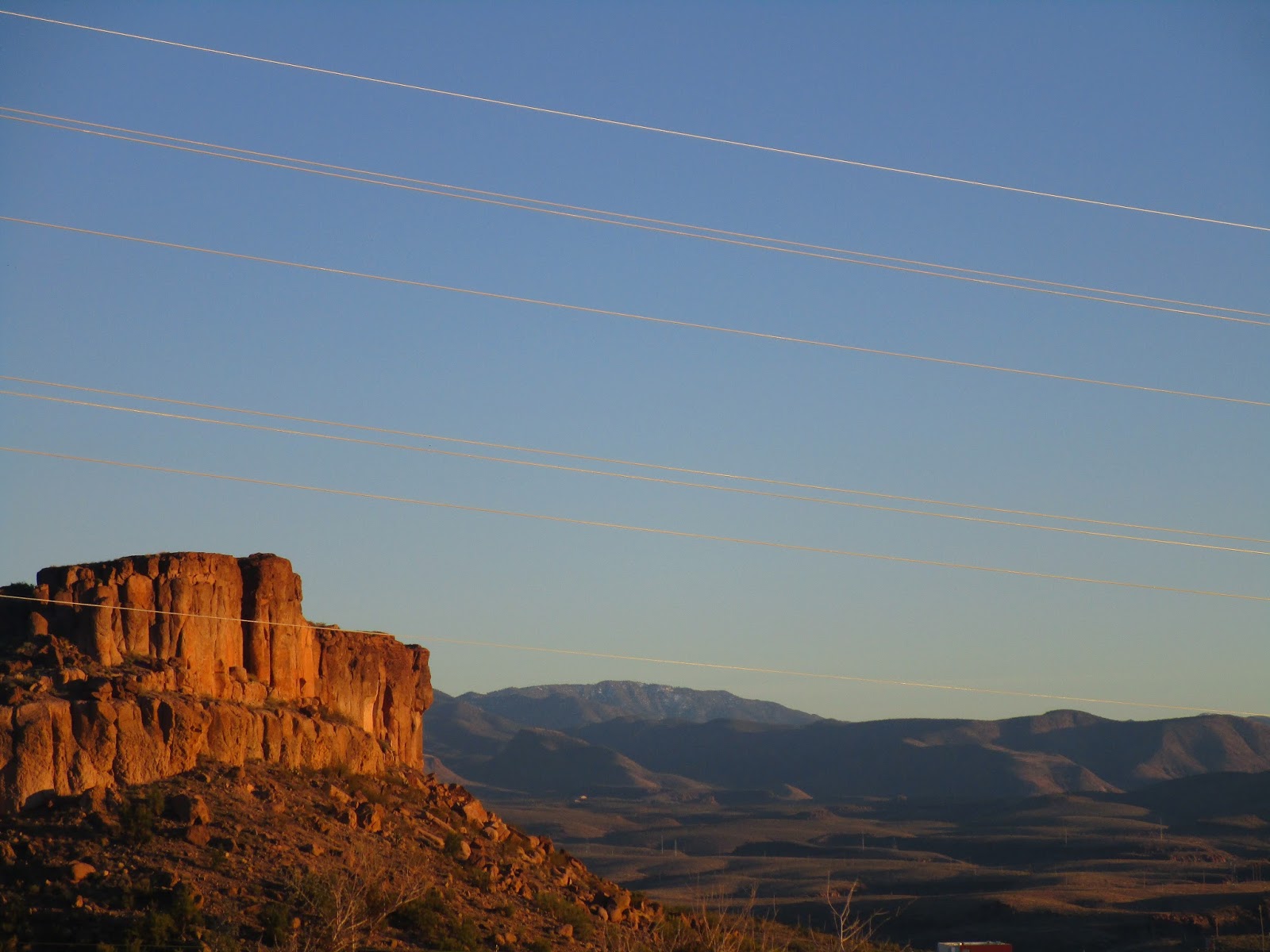
Japan's landscape is mountainous, but very different from the mountains of the United States. To steal an image, it is like someone cut the tops off of mountains and placed them on flat ground. Instead of continual slopes, there are mountains with perfectly flat spaces in between. 

Because there were so many mountains, there were also a lot of tunnels for the train to travel through. Effectively that meant that every time there was a picture-worthy scene, I had just enough time to take out my camera - but not enough time to take the photo - before we entered another tunnel and it was gone.

As we traveled further north, we saw more snow on the peaks.


What surprised my most about the overall layout of Japan was the close proximity of rural and urban structures. Fields next to multi-story buildings was not an odd sight.


It looks like clouds, but this is actually Mt. Fuji.
It's top pops out above the cloud cover.


And then I arrived. 
And I will have go on another adventure so that I can tell you about it!


Friday, January 29, 2016

Older Sisters 姉


After spending four days with my sister in her new desert home before flying to Japan,
here are some of the thoughts that struck me. I started writing this article in the airport after she dropped me off at in the A.M... and it has just taken me a while to finish it. 


1. I miss my sister so much! What I think I missed the most is how different we are  - how well we contrast and compliment one another.


2. A goobery dog and a fluffy, moose-feather cat makes her home a wonderful, happening place.


3. I am so delighted that my flight plans were delayed because it let me spend more time with my strong, funny, beautiful sister. God always knows what He is doing.


4. Despite the tiny size of her town, there is a surprising quantity and variety of good food.


5. Most shocking of all, I discovered that hiking can be fun with beautiful scenery and cool weather and an companion along for the adventure... so long as we go at a walking pace without a backpack. The above picture is my sister, Bonnie, pointing to the Chynna rock - so called by a friend who wanted a rock to call her own. 

On one of our hikes we discovered an cactus. Actually, we found a lot of cacti.This particular purple prickly pear cactus seemed not to have thorns... but it lied to us. Now we call it the  き (uu-so-tski) cactus (liar) because it is full of lies. One is pictured below.

Thursday, January 28, 2016

Come Fly with Me


       My flight to Japan this weekend was the longest flight I have ever been on, and ended up being a very looong day. Leaving my sister's house at one A.M. on Sunday morning and landing at four P.M. on  Monday. After that there were several hours on a train... All in all, it was  a 30 hour trip 

Yet I only got to see the sun rise and set once....  


On the long portion of my flight there was a count-down timer to tell me how much time was left in the air, which made me think of several Cabin Pressure  moments. Cabin Pressure is a hilarious, British radio show that is, in a word, brilliant. The most notable quotes beinge:
"World record attempting flight around THE WORLD""
  "I...Am...Bored."
"Rubbish sunset."

Below are my last view of America for a year (Golden Gate Bridge in San Francisco)  and my first view of Japan (just north of Tokyo).


During the flight, the plane tinted the windows since there were no screens to slide up and down. It gave the plane a peaceful, dark, bluish hue, as you can see by comparing the above and below photos.


That first day I basically did nothing but arrive and sleep.
Then next morning work began,so there was not a lot of time to adventure and sight-see, but I have still managed to have a few adventures. I'll tell y'all about them as soon as I can! 

Sunday, January 24, 2016

See You Soon 行ってきます

  
          Saying so many goodbyes these last couple weeks has been so lovely. At times it has been lonely and stressful because I am reminded that it will be a while before I see all of you in person again. Mostly, though, it has given me a chance to remember good memories and make new ones. Goodbyes really are bitter-sweet: bitter when we realize that our seasons of life are changing, but sweet as I realize how much blessing God has brought into my life through friends and fellowship. It is also sweet because the distance between us does not mean that we cannot stay connected.
         
     I am so thankful for the way that I have been sent off with so many well wishes and notes and prayers and reminders and gifts and chats over coffee and the list goes on. I have been lavished with love.

       The phrase (ee-te-kee-maw-su) means to go and come back. In Japan the phrase is often used when someone leaves home in the morning and a common response is  (ee-te-ra-shai … the last part is pronounced like the word “shy”) which means “Please go, then come back”. Instead of goodbye, I think it is better to depart with this.


The Seven Stages of Relocation


1. Denial
As preparation begins but the reality is still too far out, the prospect of moving to another country falls onto the back burner where "I don't have time to think about that right now..."

2. Excitement
Anticipation builds as the big day gets closer and reminders become more frequent. It is time to begin planning what I will do when I arrive. How will I spend my time? What do I want to taste and see and do?

3. Logistics
Paperwork and planning and packing... three of the many things that must be done but which are not nearly as fun as daydreaming.

4. Panic
I can't possibly do this...

5. Peace
God is in control of this whole fiasco, so I will trust that He is in control and knows what He's doing.
This will all work out somehow. 

6. Butterflies
They're not a bad thing, they just won't go away...

7. Adventure
... ... ...
Here I come.


Thursday, January 21, 2016

Traditions

"You may ask, how did this tradition start? I'll tell you. I don't know. But it's a tradition.
 And because of our traditions, every one of us knows who he is, and what God expects him to do." 
Tevye from Fiddler on the Roof

          One of the hardest parts of deciding what to pack and what to leave behind over the last month aside from not knowing exactly what to expect from Japan since I have not been there before was deciding what traditions to maintain. How am I going to celebrate holidays? In some cases where Japan does not celebrate American holidays I would need to bring decorations or supplies with me. In other cases, Japan celebrates holidays differently so that I would still need to bring things if I want to continue to celebrate the American way. This, of course, forces me to consider how much of the celebration I consider to be essential, how much is important to me for sentimental reasons, and how much I am willing to give up for a short adventure in a foreign land. 

Obviously, I determined that I wanted it all. Then I considered the size of my suitcases and thought I might take another crack at it. What is really essential?


What memorabilia and comfort items should I bring for when I am thousands of miles from home and alone in a foreign land?


I felt like both of these question were ones that were not highly addressed in any of the packing lists I found online, yet seem to be very important when traveling away from home. Also, having to ask these questions forced me to consider what I find value in and how I prioritize. The chance to move is such a great way to evaluate and reconsider the important things that fall by victim to the mundanity of everyday life.
 I think that this exercise is a really good one and not just for the college student leaving the country. Re-assessing the essentials forced me to get rid of a lot of stuff that I did not use or need. In many cases this was extremely painful to admit that I did not need it. So I got rid of it a little bit at a time over a period of months which was a lot easier than getting rid of it all at once would have been.

These are some of the essentials that I chose for my Christmas traditions:
a fold-able nativity set - string of colored Christmas lights - three Christmas ornaments - 

There were, of course, more logistical considerations as well:

       I won't find anything in English, what do I need in English (for teaching, letters home, or for myself) over the next year?  What clothing should I bring? I have the misfortune of being too large to fit Japanese shoes and probably other clothing as well. What multi-use items can I bring to function over the widest range of seasons? What American comfort foods will I want access to in Japan? Unique cosmetics goods (I expect that they won't have shampoo for blonde hair). How am I going to spend leisure time? What supplies do I need for that...?

Theses thoughts are back on my mind as I pare down and repack my suitcases for the last time before I fly out. Hurrah!